Water context
Source: well water for household use
 Smart Solutions for Reliable Water.
Performance evidence · Residential
Residential customer · Kranggan Permai, Jatisampurna, Bekasi
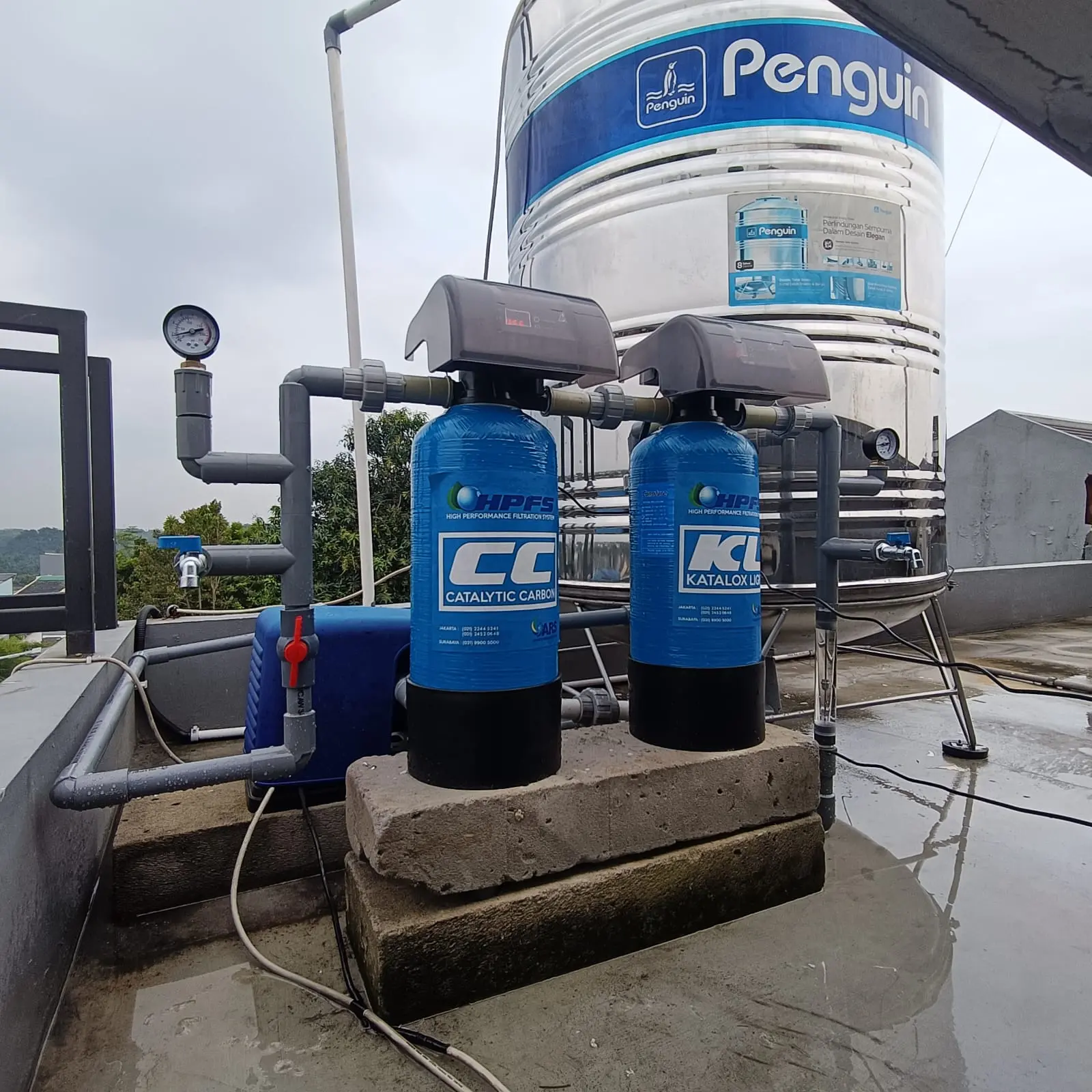
“Our well water is cloudy and smells. We need clean water and also water that can be used safely for daily drinking.”
Source: well water for household use
ARS HPFS 150 LPH Auto treats the household clean-water supply, followed by ARS DWB 150 LPH under-sink treatment at the drinking-water point of use.
Internal report 27/ARS-01/IV/2026 concludes that the well-water sample did not meet the report’s benchmark, the HPFS output met its clean-water benchmark, and the DWB output met its drinking-water benchmark for the parameters tested.
Measured evidence
The summary below reproduces selected values from the ARS internal test report. Values must be read with the sampling date, method, and water context.
| Parameter | Before | After HPFS | Drinking-water output | Report benchmark |
|---|---|---|---|---|
| TurbidityFAU | 15 | 0 | 0 | <3 |
| Colourmg/L Pt-Co | 10 | 4 | 2 | 10 |
| TSSmg/L | 10 | 0 | 0 | — |
| Manganesemg/L | 0.7 | <0.1 | <0.1 | 0.1 |
| Iron (Fe)mg/L | 0.1 | <0.02 | <0.02 | 0.2 |
| Hardnessmg/L CaCO₃ | 411 | 139 | 134 | — |
| TDSppm | 247 | 247 | 192 | <300 |
| pH | 7.0 | 7.1 | 7.8 | 6.5–8.5 |
Scope note: this internal test applies only to the submitted samples and the parameters measured on the stated date. Water quality may change. Visual clarity alone does not establish drinking-water safety; microbiological and other relevant parameters require verification according to the intended use and applicable requirements.
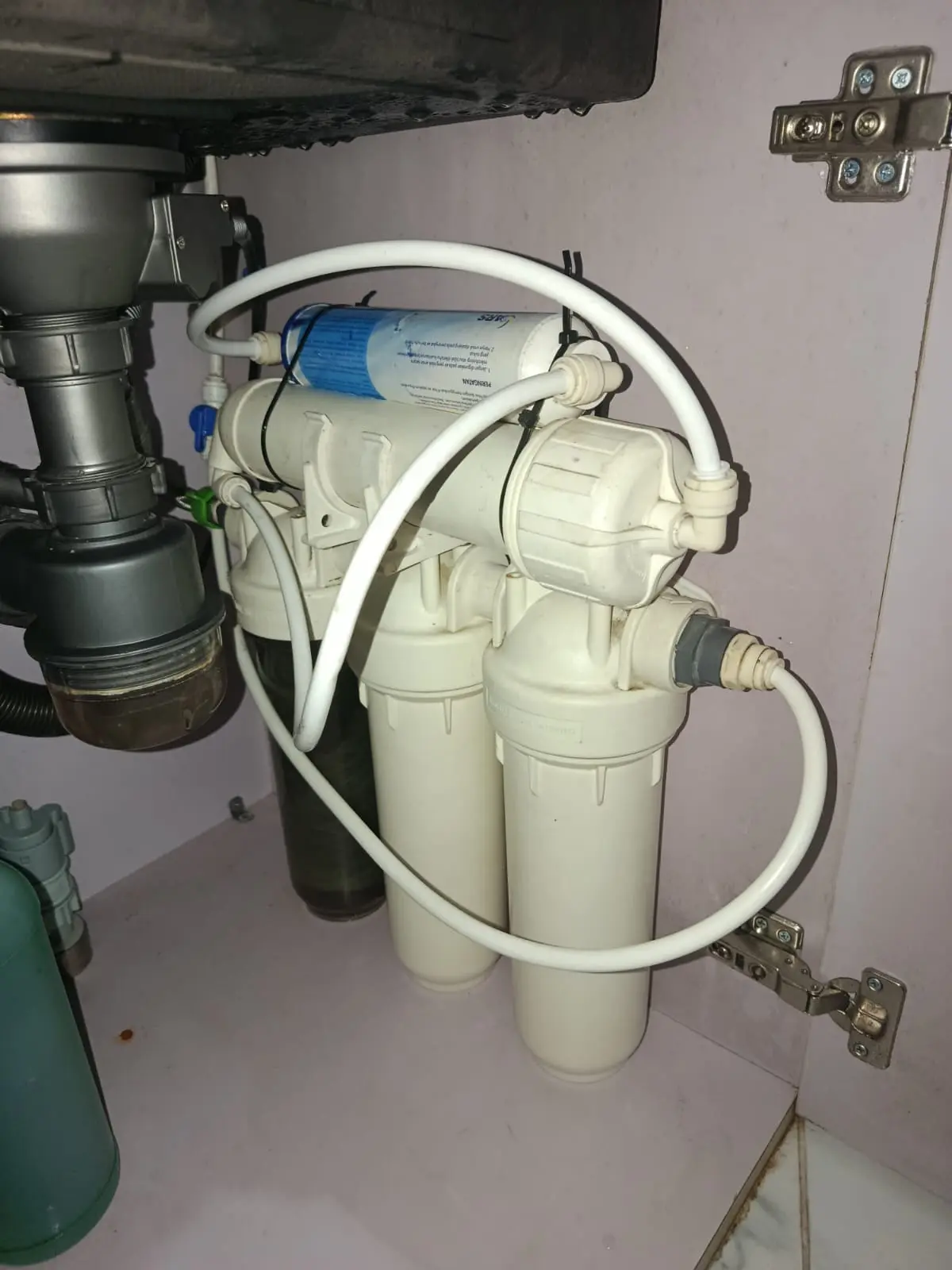
Sustaining performance
ARS uses the initial test as a performance baseline. Follow-up service can then be planned around source-water changes, usage load, pressure and flow, equipment condition, operating records, and repeat testing when required.
ARS case-study standard
Future projects will follow the same structure so readers can distinguish photographs, measured evidence, technical interpretation, and the plan for sustaining performance.